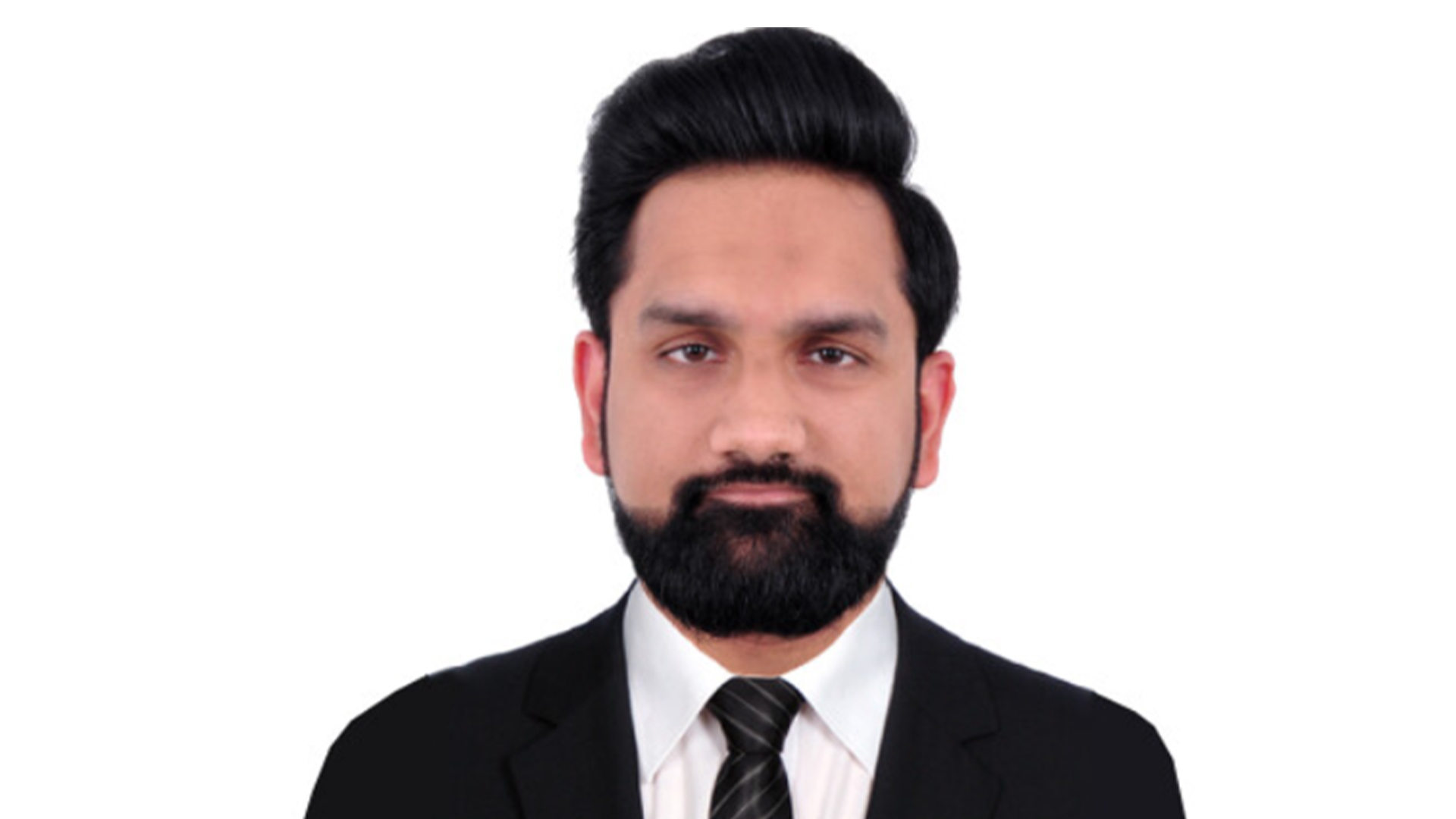
This exclusive interview with Shaikh Muhammad Adeel was conducted by Tabish Ali of the Motivational Speakers Agency.
Cyber threats are no longer confined to IT departments. As AI, ransomware and cloud adoption reshape the risk landscape, businesses across the Middle East are under growing pressure to strengthen their defences.
Shaikh Muhammad Adeel is a cyber security expert with more than 15 years of experience across security consultancy, AI, governance, risk and compliance. He is the Sales Director at Keystrike, an author on AI and cyber security, and has spoken at conferences including RSA Conference, Black Hat, GISEC and GITEX.
In this exclusive interview with the Cyber Security Speakers Agency, Shaikh examines the shift from reactive to proactive security, the misconceptions leaving businesses exposed and the threats organisations must prepare for.
Question 1: How has the cyber security landscape evolved over the past 15 years, and what has that meant for businesses?
Shaikh Muhammad Adeel: “I started in 2010, and we are now sitting in 2025. I’m seeing a shift from a reactive to a proactive approach.
“Earlier, people would only take action when something went wrong. They did not take cyber security as seriously. Now, companies are investing heavily in this area, especially mid-sized businesses and enterprises. Regulations are also driving this shift.
“People are paying more attention to how AI and machine learning can support real-time threat detection and solve cyber security issues. Bad actors also have access to AI and machine learning. Services such as ransomware as a service make it easier for an attacker to launch a targeted attack against an organisation.
“The adoption of AI and machine learning in cyber security is increasing significantly. Cloud computing, remote working and zero-trust security are also affecting how organisations protect themselves. The industry is moving from a reactive approach to a proactive one.”
Question 2: Which misconceptions about cyber security continue to influence business decisions?
Shaikh Muhammad Adeel: “One of the main misconceptions is that cyber security is solely an IT issue. It is part of information security as a whole. Governance, risk and compliance teams also have responsibility for it.
“Cyber security is a critical business risk. Whenever you discuss business risk, compliance, governance or risk management, you must pay attention to cyber security.
“Another misconception is that only large enterprises are attacked. Smaller and mid-sized businesses often think they have no valuable data or that attackers will not target them because they do not operate in financial services.
“Statistics show that small businesses are attractive targets. Some attackers use ransomware, while others steal and sell data or attack organisations for other reasons.
“People also believe cyber security is very expensive. In sales meetings, if a public company has published its financial data, we sometimes reverse-engineer the figures to show how much a breach lasting 10 or 20 minutes could cost.
“Cyber security is an investment, similar to insurance. Organisations need suitable protections in place.
“It does not always require significant investment. An organisation may already have a cyber security solution and only need to fine-tune it, add another layer or introduce additional rules. These are some of the misconceptions I am seeing in the market.”
Question 3: Which cyber threats currently pose the greatest risk to organisations, and how should businesses address them?
Shaikh Muhammad Adeel: “The first major threat is phishing and social engineering. There is a statement that you cannot patch a human. You can train people, enforce rules and provide security awareness training. HR, IT or information security departments may conduct these exercises.
“With phishing and social engineering, you may receive an email that appears to come from your CEO or someone you know. It can look completely genuine. When you click it, your computer may be compromised, a back door may be created or the attacker may move laterally towards sensitive systems and encrypt your machines.
“This is happening frequently. People are receiving phishing emails that appear to come from their CEOs.
“Organisations should train their employees and place greater emphasis on security awareness. Humans are the weakest link in cyber security. You can have excellent technology and processes, but failing to invest in people can lead to a serious incident.
“Ransomware is another major threat. An attacker encrypts your machines or servers and then demands money. Ransomware began increasing around 2015 or 2016 and has since become extreme. I regularly receive calls from people whose machines have been encrypted.
“Insider threats are another risk. Some organisations believe they are safe because they are air-gapped and do not have internet access, but that is not always the case.
“Businesses can address this through least-privilege access controls and solutions such as Keystrike, which can stop lateral movement and provide continuous authentication.”
Question 4: What principle should business leaders remember when developing their cyber security strategy?
Shaikh Muhammad Adeel: “Cyber security is not a one-time effort. It is a continuous process.
“Businesses must move quickly because cyber security does not become outdated. Different attack vectors emerge as technology develops. With Web 3.0 and blockchain, we need blockchain security. With AI, we need AI security. With quantum computing, encryption must become quantum-proof for the future.
“Cyber security is a continuous investment that protects the organisation and provides visibility. Cyber security is not a one-time effort. It is a continuous process.”