For businesses from the Middle East and North Africa, entering the European Union involves far more than finding distributors or generating demand. Products must also be adapted, labelled, packed and prepared for sale in line with the requirements of individual EU markets. Managing these processes from outside Europe can add cost, complexity and delays to an already demanding expansion.
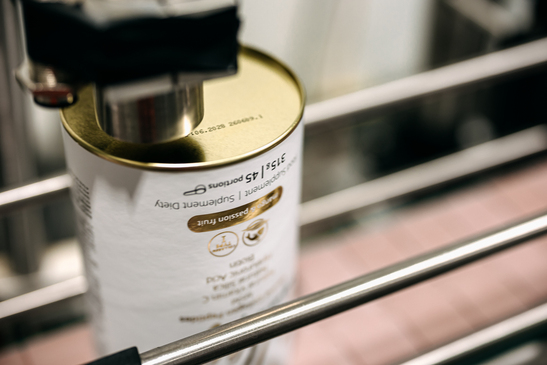
One way to simplify this stage is to work with a co-packer: a specialist that handles activities such as filling, labelling, shrink-wrapping, repacking and assembling retail-ready or promotional sets.
“We are seeing growing interest from Middle Eastern companies, especially from the UAE, Saudi Arabia and Israel, as well as from North Africa, including Morocco,” says Bartek Grajewski, Director at Poland-based TRANSPAK Co-Packing. “The products are often premium lifestyle goods – wellness supplements, nutrition ranges, teas or cosmetics. Poland provides access to high EU standards while remaining more cost-efficient than many Western economies, so the trend is not surprising.”
This growing interest reflects the wider advantages Central and Eastern Europe can offer. This article examines how EU-aligned standards, skilled labour, lower storage costs, strong logistics and a varied co-packing market can support Middle Eastern and North African brands entering Europe.
EU standards at a more competitive cost
A co-packer must offer the right balance between cost and quality. Excessive pricing can erode margins, but poor-quality execution may be even more expensive. Incorrect labels, inconsistent packs or missed deadlines can delay a launch, trigger retailer complaints, leave stock unsuitable for sale and damage the brand’s reputation.
This is where Central and Eastern Europe can offer a strong middle ground. Most countries in the region joined the EU more than two decades ago and have since developed mature manufacturing and service sectors operating within the same regulatory environment as their Western European clients.
Established CEE providers may also operate under systems such as HACCP, GMP, ISO and Organic. These do not replace due diligence, but they demonstrate that competitive pricing does not have to come at the expense of process control.
Skilled labour and modern machinery
Co-packing often combines automation with manual work. Filling machines, labellers, shrink tunnels and dosing systems handle repeatable volumes, but premium bundles, gift sets, short runs and unusual formats may still require trained people.
Central and Eastern Europe can offer both modern facilities and lower labour costs than many Western European economies. Eurostat’s 2025 data show the scale of the gap: average hourly labour costs reached €47.90 in the Netherlands and €15.20 in Hungary, while Poland also remained well below the EU average.
The advantage is not simply a lower hourly rate. It is having enough skilled manual capacity when a campaign changes, a premium pack needs careful finishing or several market versions must be prepared at once. For brands testing EU demand, that flexibility may be more valuable than investing in their own line.
Lower storage costs and later localisation
Warehousing is another area where CEE can offer a cost advantage. In Poland, asking rents for large logistics facilities were generally €3.80–€5.00 per square metre per month at the end of 2025, with Warsaw remaining below major Western hubs.
These lower storage costs can make it more economical to keep products in a central EU location before preparing them for individual markets. Instead of importing finished country-specific SKUs, a company can bring in a common base product, store it in Poland or Hungary, and add approved labels, inserts, bundles or promotional elements once actual orders become clearer.
This late-stage localisation reduces the amount of stock tied to one language, retailer or campaign. It also makes rework easier if a label needs correcting or a product must be adapted for another market.
A gateway to Western European markets
Lower operating costs would matter less if CEE were poorly connected to the target markets. In practice, several countries in the region sit on major European transport routes. Poland is particularly well placed for serving Germany and the Benelux region, while Czechia and Slovakia provide convenient access to Germany and Austria. Hungary can serve Austria and other Central and South-Eastern European markets. These countries are connected by corridors such as the North Sea–Baltic, Baltic Sea–Adriatic Sea and Rhine–Danube routes.
For a Middle Eastern or North African brand, the model is straightforward: goods enter the EU, are stored and adapted for individual customers, and then move by road to their target markets. The best base depends on import routes and demand, but much of CEE places retail-ready products within a practical distribution distance of Western Europe.
Selected quality co-packing providers in CEE
The right provider depends not only on project size, but also on whether the business needs a flexible co-packing specialist, a large logistics group or a partner willing to handle smaller and less regular volumes.
TRANSPAK is a strong fit for medium-sized businesses and corporations looking for a flexible provider with both manual and automated capabilities, extensive certifications and experience serving German and other European customers.
FM Logistic is better suited to very large companies that want co-packing integrated with broader warehousing, transport and supply-chain services. Its site in central Poland specialises in packing and repacking as part of a wider logistics offer.
T-Pack in Hungary may be more appropriate for food products, one-off projects or lower-volume requirements. The company states that it has no MOQ and can combine packaging with materials, storage and transport.
A balanced entry point into the EU
For brands from the Middle East and North Africa, CEE should not be viewed merely as the cheapest place to package goods. Its real advantage is the combination of EU-standard processes, skilled capacity, lower labour and storage costs, and access to Western markets.
The best choice depends on the product, volume, destination and regulatory requirements. Where these factors align, a CEE co-packer can provide a controlled and cost-efficient base for entering and expanding across the EU.