Across the Gulf, the luxury hotel industry is booming. From Saudi Arabia and the UAE to Qatar and Bahrain, hotel owners, developers, operators and project teams are looking to tap into this growth by delivering properties that genuinely meet the expectations of guests accustomed to luxury. This challenge extends beyond architecture and service. Every part of the interior needs to support the premium experience the hotel promises.
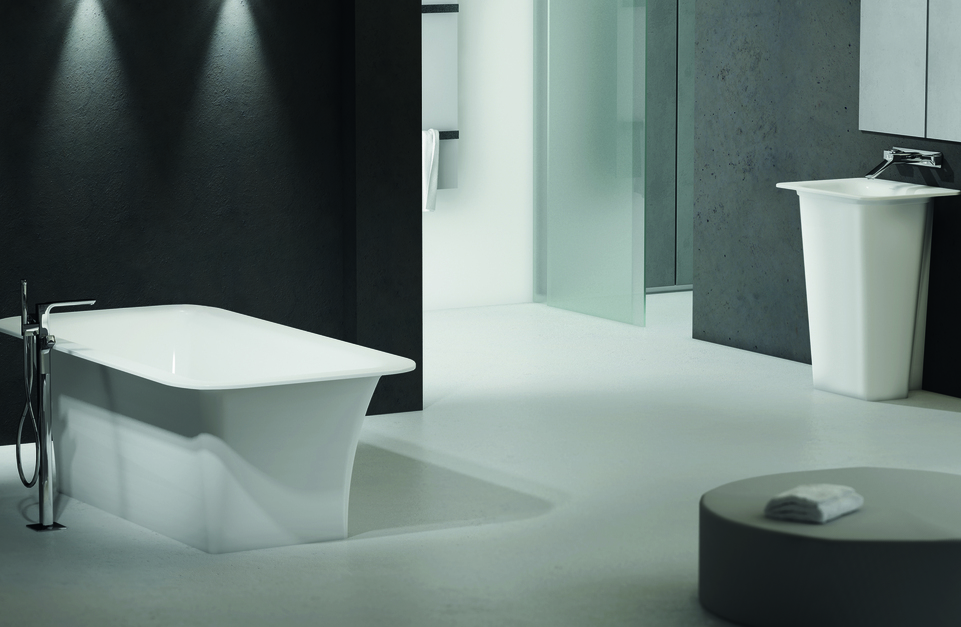
The hotel bathroom is one of the places where that promise is tested most closely. Bathtubs, washbasins and shower trays play an important role in the overall impression created by the room. Fixtures that look ordinary, wear badly or prove difficult to maintain can weaken an otherwise exceptional interior. What’s more, across hundreds of bathrooms, a poor specification can lead to costly replacements, delayed openings and pressure on maintenance teams.
Choosing the right bathroom fixture supplier therefore involves more than comparing designs and prices. For hotel owners, developers, operators and project teams delivering premium hospitality projects in a region closely associated with luxury, the challenge is to find sanitary ware that meets high-end expectations while also satisfying practical operational demands. This article explains five criteria for evaluating bathroom fixture manufacturers and selecting products that will impress guests, perform reliably and support the project over time.
01. Look for design that feels genuinely distinctive
Luxury guests are accustomed to polished interiors. Standard shapes and familiar finishes may function perfectly well, but they are unlikely to make a property memorable.
Evaluate the fixture as part of the full room concept. Look at its proportions, edge details, colour depth and the way the surface reflects light. The finish should remain convincing from close range, not only in a catalogue image. A smooth, highly uniform composite surface, for example, can create a more sculptural and refined impression when produced and finished well.
Physical samples are essential. Review them under the planned lighting and alongside the stone, timber, metalwork and fittings selected for the room. A strong supplier should also be able to provide coordinated product families, allowing bathtubs, washbasins and shower trays to share a clear design language.
02. Choose materials that suit intensive hotel use
A hotel bathroom is used and cleaned far more frequently than most private bathrooms. The material must therefore support both appearance and long-term performance.
Ask how the fixture responds to cleaning agents, temperature changes, minor impacts, staining and surface damage. Ceramic remains a durable and hygienic option, but it is brittle and significant chips can be difficult to repair. Selected mineral composites can offer a substantial feel, smooth surfaces and the possibility of repairing minor damage, depending on the material and finishing system.
Practical qualities matter too. A non-porous surface can make cleaning easier, while a well-constructed composite bathtub may feel warmer and retain heat effectively. For shower trays and bathing areas, ask whether anti-slip performance has been tested rather than judging safety from visible texture alone.
03. Prioritise genuine B2B and project experience
A supplier accustomed mainly to individual consumers may not be prepared for the demands of a major hospitality project. Hotel owners, architects and procurement teams need accurate drawings, dependable samples, installation guidance, repeatable finishes and reliable replacements.
The manufacturer should understand mock-up rooms, phased deliveries, specification changes and the importance of consistency across many units. It should also provide one clear point of contact who can coordinate technical and commercial questions.
A useful example is B2B bathroom fixture manufacturer Marmorin, which works exclusively with corporate customers and supports private label, OEM, ODM and custom development projects. Whatever supplier is considered, the important question is whether its processes are designed around professional clients rather than adapted from a retail model.
04. Verify international delivery experience
Exporting products successfully involves more than arranging transport. A supplier serving Gulf projects should be able to communicate clearly in English, prepare the necessary documentation, protect products during long-distance shipping and coordinate deliveries with the project schedule.
Ask where the company has supplied before, what packaging systems it uses and how it handles replacements or repeat orders across borders. International experience should also be visible in the quality of technical documents and the supplier’s understanding of different installation and specification requirements.
For premium projects, consistency between the approved sample and delivered batch is especially important. A manufacturer with established export procedures is more likely to understand how production, inspection, packaging and logistics must work together.
05. Demand evidence of quality, not broad promises
Claims such as “premium quality” are easy to make. Project teams need evidence.
Look for formal quality-management systems such as ISO 9001, relevant product testing and clear inspection procedures. Ask whether every product is checked or only selected batches, which characteristics are verified and how results are documented. Depending on the category, checks may cover dimensions, drainage, surface finish, cleanability, impact resistance or thermal performance.
Certificates are useful, but they do not replace practical questions. Request test information, inspect samples and ask about the supplier’s claim rate and corrective-action process. The strongest manufacturers can explain not only how they prevent defects, but also what happens if a problem reaches the site.
Source for the full life of the project
Premium bathroom fixtures must do two jobs. They need to create the visual and tactile impression expected in an ambitious Gulf hotel, and they must continue performing under intensive daily use.
The strongest supplier will therefore combine distinctive design, suitable materials, genuine B2B experience, proven export capability and documented quality systems. Evaluating all five areas reduces the risk of selecting a product that looks impressive at first but becomes expensive or difficult to manage later.
The goal is not simply to equip the bathroom before opening day. It is to choose fixtures and a manufacturing partner capable of supporting the hotel’s reputation for years.